A drink driving charge in Singapore is not simply about a failed breath test. The evidence the police rely on, the way it was collected, and whether proper procedures were followed all determine what happens next.
Many people do not realise how much room there is to scrutinise the State’s case.
At Ashvin Law Corporation, reviewing this evidence carefully is where every drunk driving defence begins.
Key Takeaways
- A DUI lawyer does not just show up in court. Their most important work happens in the review of every piece of evidence before any hearing takes place.
- Breathalyser results, blood test outcomes, CCTV footage, police reports, and witness accounts are all subject to scrutiny and can be challenged where procedural or factual errors exist.
- Singapore’s drink driving penalties are serious and have been tightened since 2019. Understanding what the evidence shows (and does not show) is essential to any defence or mitigation.
- Early engagement of a lawyer gives you the best opportunity to identify weaknesses in the prosecution’s case before it is too late.
What Is a DUI Charge in Singapore?
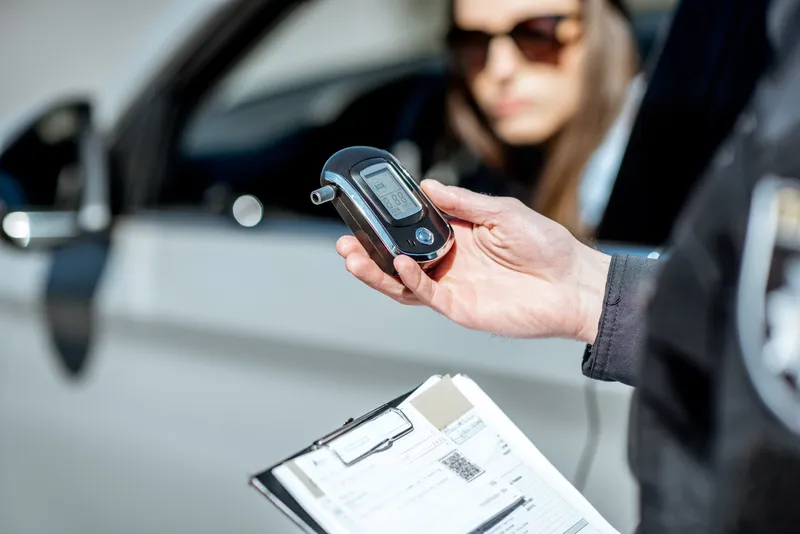
In Singapore, drink driving is governed by the Road Traffic Act 1961, specifically Section 67. A person commits an offence if they drive or are in charge of a vehicle while their alcohol level exceeds:
- 35 micrograms of alcohol per 100 millilitres of breath, or
- 80 milligrams of alcohol per 100 millilitres of blood
A person can also be found guilty even if their reading is below these thresholds if the court is satisfied they were unfit to drive due to the influence of alcohol or drugs. The law looks at actual impairment, not just the numbers.
A DUI lawyer reviews every piece of evidence the police have gathered to determine whether the charge can be contested, whether procedural errors were made, and what mitigating factors can be presented to reduce the sentence.
The Evidence a DUI Lawyer Reviews
1. Breathalyser Results
The breathalyser process in Singapore works in two stages:
| Test | Device | Location | Purpose |
|---|---|---|---|
| Preliminary Breath Test | Handheld breathalyser | Roadside or checkpoint | Initial screening |
| Evidential Breath Test (EBT) | Stationary evidential breath analyser | Police station | Formal evidential reading |
If the preliminary test indicates your blood alcohol content is above or near the legal limit, you will most likely be required to go to the police station to give another sample on a more accurate breathalyser machine and/or to give a blood sample.
Should those confirmatory tests place you above the legal alcohol limit, the readings become the primary evidence used to support a charge against you.
To contest the EBT results, the accused would need to prove, through expert evidence, that an inhalant or medication they took skewed the breathalyser’s reading, or that the machine was poorly maintained, calibrated, or malfunctioning. This is a difficult but not impossible argument, and it requires the lawyer to act quickly.
2. Blood Test Results
Where a blood sample is taken, the lawyer will review:
- The chain of custody or who handled the sample and when
- Whether the sample was stored and analysed under proper conditions
- Whether the accused had any medical condition, medication, or health issue that could affect the reading
- Whether the blood was drawn by an authorised medical professional within the required timeframe
Errors in handling biological samples can render results inadmissible or at least subject to meaningful challenge.
3. CCTV and In-Car Camera Footage
A lawyer will request and scrutinise all evidence collected by the police, including CCTV footage, to look for inconsistencies or procedural breaches.
CCTV footage from the arrest location, police station, or nearby cameras may show:
- Whether driving behaviour was actually impaired
- How the roadside stop and breath test were conducted
- Whether police procedures at the checkpoint were followed correctly
Footage showing steady, controlled driving immediately before the stop can support a mitigation argument, even if the breathalyser reading was above the limit.
4. Police Reports and Investigation Documents
Police reports form a central part of the prosecution’s case. A DUI lawyer reviews these closely for:
- Accuracy of the facts recorded, such as times, locations, and observed behaviour
- Whether the arresting officer had reasonable grounds to stop the vehicle
- Whether the required caution was administered before any statement was taken
- Procedural compliance throughout the arrest and testing process
Inaccuracies or omissions in police reports do not automatically lead to acquittal, but they can raise reasonable doubt or support a challenge to specific charges.
5. Witness Statements and Eyewitness Testimony
Witness accounts, whether from passengers, bystanders, or the police officer conducting the stop, are assessed for consistency, credibility, and reliability.
A lawyer will compare witness statements against each other and against physical evidence to identify contradictions. Where eyewitness accounts exaggerate driving behaviour or contradict what CCTV footage shows, those discrepancies become relevant to the defence.
Penalties: What the Evidence Affects
Understanding penalties helps explain why evidence review matters so much. The court uses the breathalyser or blood test reading, alongside aggravating and mitigating factors, to determine the sentence.
| Offence Category | Fine | Imprisonment | Driving Disqualification |
|---|---|---|---|
| First-time offender | S$2,000 to S$10,000 (fine and/or imprisonment) | Up to 12 months (discretionary) | Minimum 2 years (unless special reasons) |
| Repeat offender | S$5,000 to S$20,000 | Imprisonment up to 2 years (in addition to fine); enhanced penalties of up to three times the prescribed punishment may apply under s 67A | Minimum 5 years (unless special reasons) |
| Two or more prior convictions | S$5,000 – S$20,000 | Imprisonment up to 2 years (in addition to fine); enhanced penalties of up to three times the prescribed punishment may apply under s 67A | Mandatory lifetime disqualification, unless special reasons |
Source: Road Traffic Act 1961, Section 67, as amended in November 2019.
The Road Traffic (Amendment) Act 2019, in force from 1 November 2019, substantially increased the penalties for drink driving. A first-time offender now faces a fine of between S$2,000 and S$10,000, imprisonment of up to 12 months, or both, and a minimum disqualification of two years (unless the court finds special reasons not to order disqualification, or to order a shorter period).
Aggravating Factors That Increase Sentences
For section 67 offences where no harm has resulted, courts now apply the sentencing framework set out by Menon CJ in Rafael Voltaire Alzate v Public Prosecutor [2021] SGHC 224, which calibrates the fine and disqualification period to the offender’s breath-alcohol level.
The presumptive bands under Rafael Voltaire Alzate are:
| Breath Alcohol (μg per 100 ml) | Indicative Fine | Disqualification |
|---|---|---|
| 36–54 | S$2,000–S$4,000 | 24–30 months |
| 55–69 | S$4,000–S$6,000 | 30–36 months |
| 70–89 | S$6,000–S$8,000 | 36–48 months |
| ≥ 90 | S$8,000–S$10,000 | 48–60 months (or longer) |
Custodial sentences are generally reserved for cases involving personal injury, property damage, or other aggravating conduct.
The earlier decision in Stansilas Fabian Kester v Public Prosecutor [2017] 5 SLR 755 remains relevant for the offence-specific aggravating factors the court considers, which include:
- High blood alcohol level significantly above the legal limit
- Dangerous or erratic driving behaviour leading up to the stop
- Causing injury, death, or property damage
- Driving with passengers in the vehicle
- Prior traffic convictions
- Refusing to cooperate with the police or provide a breath or blood sample
Common Myths About DUI in Singapore
“I can refuse a breath test.”
No. Refusing a lawful request to take an alcohol breathalyser test is a criminal offence in Singapore. The legal framework treats refusal as seriously as a failed test. Drivers who refuse may face the same fines, imprisonment, and disqualification periods as those who fail the test.
“If my reading is just slightly over the limit, I will only get a fine.”
Not necessarily. The court considers the reading alongside all other factors. A reading just above the limit with clean driving behaviour and no prior record is very different from a high reading with erratic driving.
“Hiring a lawyer means fighting the charge in court.”
Not always. Many drink driving matters are resolved through a guilty plea with strong mitigation. A lawyer’s value in these cases lies in presenting your personal circumstances, cooperation, and remorse in the most compelling way possible to secure the lowest available sentence.
Building a Defence or Mitigation Strategy
Once evidence has been reviewed, a DUI lawyer will advise on one of two paths:
- Claiming trial, where there is a genuine basis to challenge the evidence. This may involve challenging the EBT results through expert evidence, challenging police procedure, or contesting the factual basis of the charge.
- Pleading guilty with mitigation, where the evidence is strong but the sentence can be reduced. A well-prepared mitigation plea will highlight a clean driving record, genuine remorse, early cooperation with authorities, any exceptional personal circumstances, and steps taken towards rehabilitation, such as voluntary alcohol counselling.
What Evidence Does a DUI Lawyer Review in Drink Driving Cases?
From breathalyser calibration records to CCTV footage and the chain of custody for blood samples, a skilled DUI lawyer leaves no piece of evidence unexamined.
The strength of your position, whether that means contesting the charge or securing the most favourable sentence, depends on how thoroughly and quickly that review is done.
If you have been arrested or charged with drink driving in Singapore, Ashvin Law Corporation is available for a confidential consultation. The earlier you get advice, the more options remain open.
Frequently Asked Questions
Can I represent myself in a DUI case?
Legally, yes. Practically, it is inadvisable. The sentencing framework is technical, the evidence involves scientific readings, and the court expects a properly structured mitigation plea. Self-represented accused persons often receive no mitigation credit simply because they are unaware of what to present or how.
What are the consequences of refusing a breathalyser test?
Refusal is treated as a criminal offence under the Road Traffic Act. The penalties are equivalent to those for failing the test, meaning fines, potential imprisonment, and a minimum two-year driving disqualification for a first refusal.
How can I challenge the evidence against me?
A DUI lawyer will review whether the breathalyser or EBT machine was properly calibrated, whether police procedures were correctly followed, whether there are medical explanations for an elevated reading, and whether any CCTV or witness evidence contradicts the prosecution’s account.
Challenges must be grounded in evidence and, where required, pursued with expert witnesses.
What happens if I am charged with a DUI in Singapore?
You will be required to attend court. At the first mention, you decide whether to plead guilty or claim a trial. If you plead guilty, sentencing may occur at the same hearing or at a subsequent hearing. If you claim a trial, the matter proceeds to a full hearing with witnesses and legal arguments on both sides.
Throughout this process, a lawyer manages filings, attends hearings, and represents your interests.
How a Lawyer for Theft in Singapore Approaches Mitigation Work
How a Defence Lawyer in Singapore Prepares for a Criminal Trial